What the Foundry Ridge Public Hearing Revealed
Residents raised urgent questions about public health, water, farmland, data-center demand, utility ownership, and the cumulative industrialization of rural Walworth County.
By Darcey Rojas, Founder of EVA | Environmental Vigilance Alliance
Published July 20, 2026 · Updated July 20, 2026
On July 16, 2026, the Public Service Commission of Wisconsin held two public hearing sessions on the proposed Foundry Ridge Energy Center in the Town of Darien.
Across the afternoon and evening sessions, residents, physicians, farmers, young people, landowners, union representatives, environmental advocates, business owners, and public officials offered sworn testimony about the project.
The official PSC transcript records 58 public witnesses. EVA's manual review categorizes 49 as opposing the project or otherwise arguing against approval, eight as expressly supporting approval, and one as offering conditional comments on behalf of a prospective construction partner without expressly requesting approval. (Source: PSC REF 598382.)
That is EVA's classification, not an official PSC tally. But the overall pattern is unmistakable:
The public testimony was overwhelmingly opposed to Foundry Ridge, and the concerns extended far beyond the immediate footprint of a single gas plant.
Watch the July 16, 2026, public hearing
View the [2:00 p.m. afternoon session] and the [6:00 p.m. evening session] on the Public Service Commission of Wisconsin’s YouTube channel. The videos provide an audiovisual record of the hearing; the official written record is the PSC transcript, PSC REF 598382.
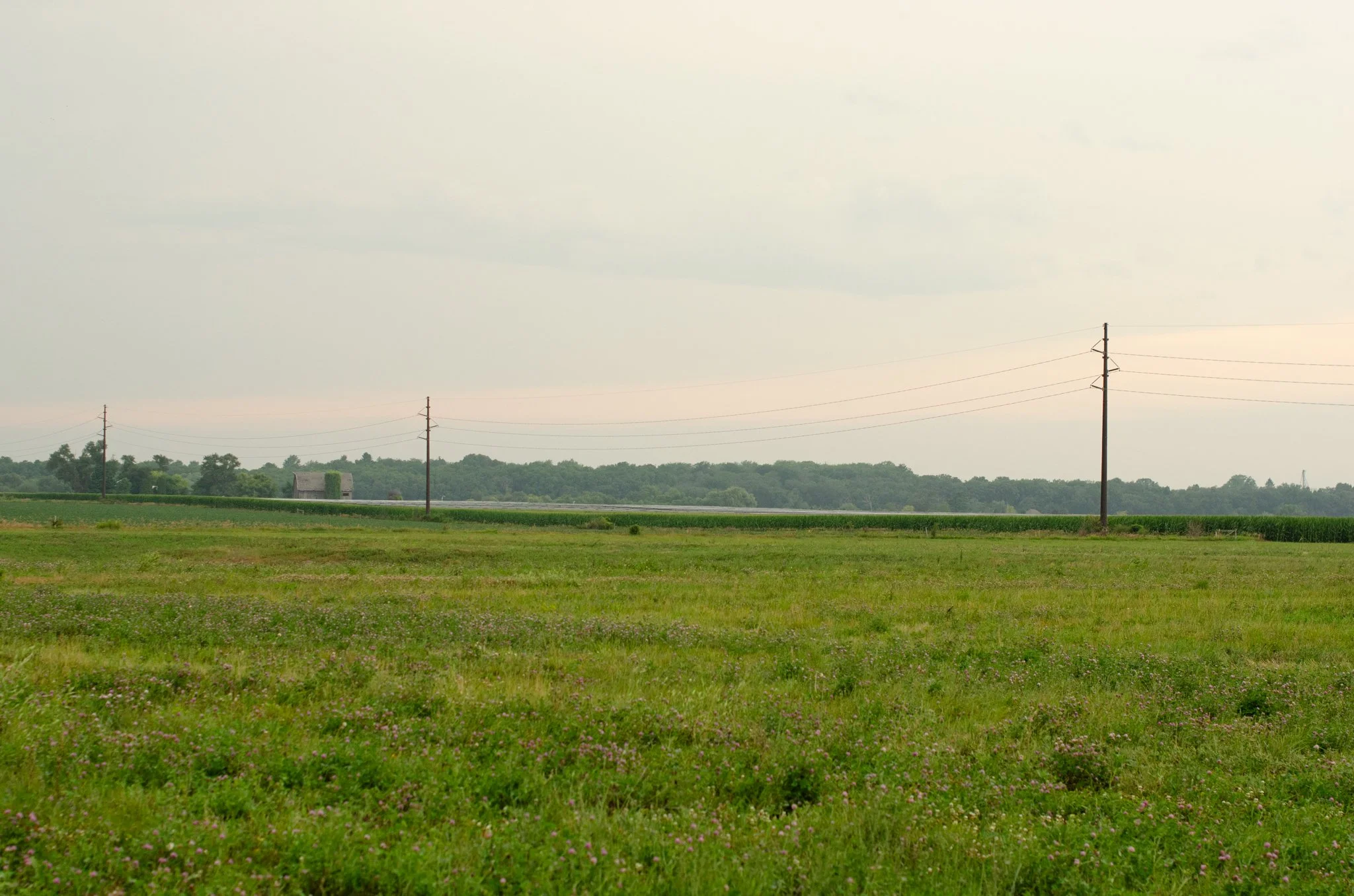
Agricultural land near the proposed Foundry Ridge Energy Center site in the Town of Darien, Wisconsin. Residents repeatedly described preserving the area's rural character, farmland, and natural resources during the July 16, 2026 public hearing. Photo by Darcey Rojas / EVA | Environmental Vigilance Alliance.
What is Foundry Ridge?
Foundry Ridge Energy Center is a proposed natural-gas-fired generating facility planned for rural land near Darien.
The facility has frequently been described as a peaker plant, meaning that it would be capable of starting quickly during periods of high electricity demand or limited generation from other sources.
The application describes three natural-gas-fired simple-cycle combustion turbines capable of generating up to approximately 324 megawatts, together with exhaust stacks, a 138-kilovolt generator tie line, a new on-site well, electrical infrastructure, a natural-gas pipeline connection, roads, lighting, and other associated facilities. (Source: PSC REF 592365; PSC REF 592366.)
Project filings describe an expected annual capacity factor of approximately 20 percent, with monthly and seasonal variation. That is not a daily operating limit. The application states that daily and weekly capacity factors could reach 100 percent. Separately, the proposed Title V fuel-based operating limit is equivalent to approximately a 27 percent annual capacity factor at full load. (Source: PSC REF 592365; PSC REF 597140.)
The project entered the PSC process through Foundry Ridge Energy Center LLC, an Invenergy affiliate, as a wholesale merchant generating facility. (Source: PSC REF 592365.)
A separate proceeding shows that Wisconsin Electric Power Company, which operates under the We Energies brand, has applied for approval to acquire the project, including its permits, development rights, property interests, and generation capacity. (Source: PSC REF 566848 was deemed an unacceptable filing. A separate proceeding, Docket 6630-BS-103, concerns Wisconsin Electric Power Company’s application for approval to acquire ownership interests in Foundry Ridge and its associated facilities. A later public procurement agreement confirms that Wisconsin Electric and Invenergy anticipated an asset purchase agreement through which Wisconsin Electric would acquire the project’s development assets and then contract with Invenergy to construct the facility. (Sources: PSC REF 594113 and PSC REF 598230.))
Later utility filings state that the subscribing Very Large Customer elected to subscribe to 100 percent of Foundry Ridge as a Bespoke Resource. Wisconsin Electric also states that, but for the incremental load from Very Large Customers, this dispatchable resource would not be required for its existing generation portfolio. (Source: PSC REF 594996; PSC REF 596269.)
This is one reason residents remain confused about the project.
The physical plant is being reviewed in one docket. The proposed utility acquisition is being considered in another. Very Large Customer tariffs, customer cost allocation, gas service, transmission needs, and other related infrastructure are addressed through still other records and proceedings.
Viewed separately, each case may appear to involve only one limited decision. Viewed together, they reveal a much larger question:
Is Foundry Ridge an isolated peaker plant, or is it one part of a wider energy and infrastructure buildout being developed to serve extraordinary new industrial electricity demand?
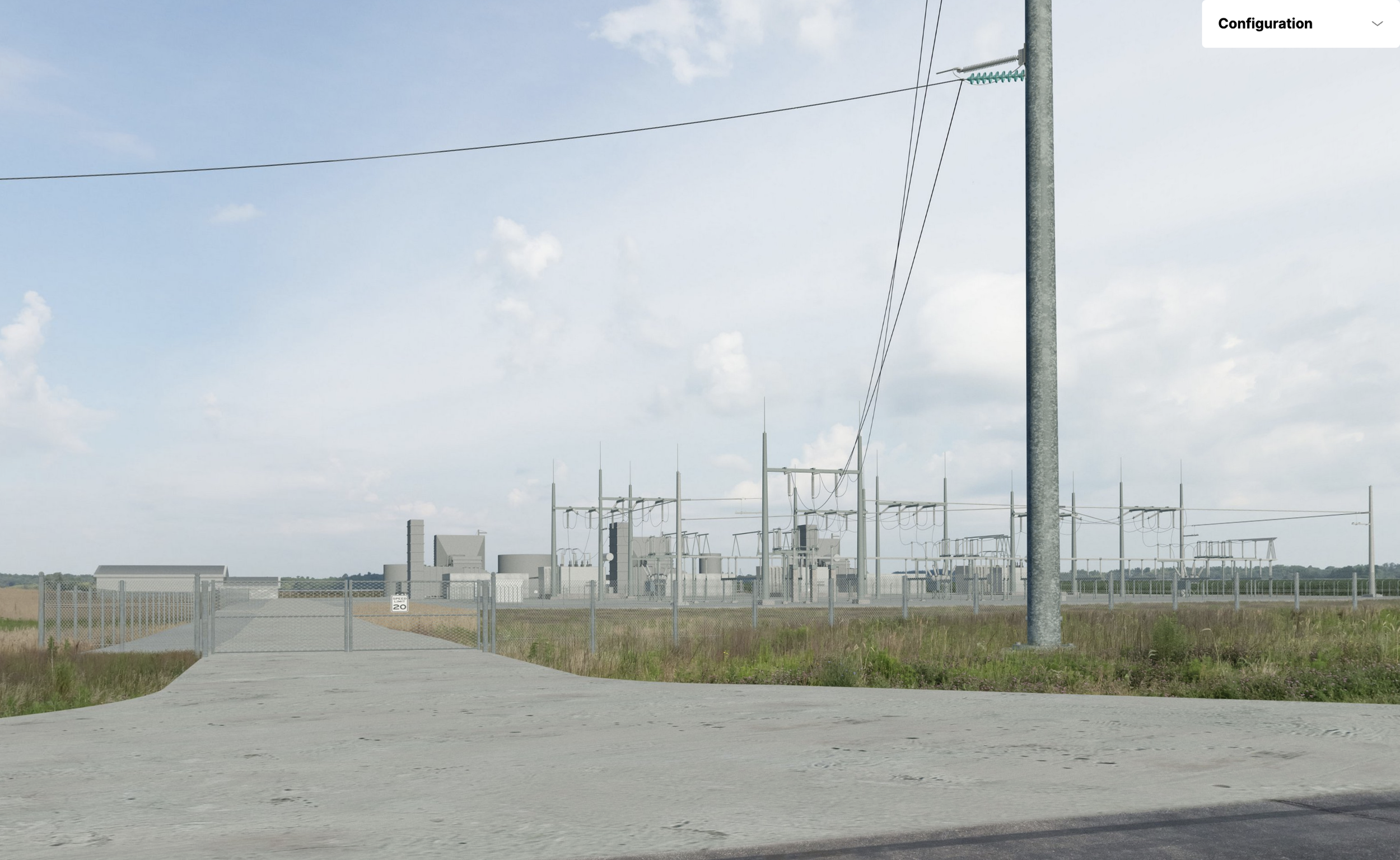
Proposed Foundry Ridge Energy Center development rendering. Image from Invenergy’s website for Foundry Ridge.
The central question raised at the hearing
The public hearing was not simply a debate between people who support natural gas and people who support renewable energy.
The deeper question was whether one rural community should be required to absorb the health, environmental, land-use, safety, and quality-of-life consequences of a large generating facility being developed largely in response to new industrial electricity demand.
Project supporters emphasized grid reliability, union employment, apprenticeships, economic activity, and the need for dispatchable generation that can operate when solar and wind production are unavailable. (Source: PSC REF 598382.)
Project opponents questioned whether those benefits justified the permanent consequences for the people who live near the facility - and whether the plant has been demonstrated to be necessary for ordinary Wisconsin customers. (Source: PSC REF 598382.)
Public health was one of the dominant themes
Air pollution and health were among the most frequently raised concerns.
Physicians and health professionals testified about connections between fossil-fuel combustion pollution and respiratory disease, cardiovascular illness, pregnancy complications, neurological damage, cancer, and premature death. A separate expert analysis filed in the docket modeled health effects associated with Foundry Ridge and Red Oak Ridge together. (Source: PSC REF 598382; PSC REF 593425.)
The timing of the hearing made those concerns especially immediate. During the afternoon session, Examiner Michael Newmark noted on the record that the Wisconsin Department of Natural Resources had issued a PM2.5 air-quality advisory that appeared to cover all counties. Witnesses described smelling smoke, experiencing throat irritation, wearing masks or respirators, and struggling to work outdoors in hot conditions. (Source: PSC REF 598382.)
The smoke did not originate from Foundry Ridge, and wildfire emissions are not identical to power-plant emissions. But the event gave residents a firsthand experience of what it means to live under dangerous air-quality conditions.
Their message was clear: Wisconsin should be reducing preventable pollution, not deliberately adding another combustion source to an already burdened regional airshed.
Project supporters responded that the proposed plant would use modern natural-gas technology, comply with air permits, and produce fewer emissions than older coal-fired generation. (Source: PSC REF 598382.)
That creates an important distinction. A facility may comply with current regulatory limits and still contribute additional pollution and measurable health damage. Permit compliance does not mean that emissions are harmless or that cumulative exposure is insignificant.
Residents questioned whether the plant is truly needed
A second major theme was the question of necessity.
Several speakers challenged the familiar public description that the facility could generate enough electricity to power tens of thousands of homes. They noted that saying a plant is capable of powering homes does not establish that it is being built because existing households in Darien or elsewhere in Wisconsin require that electricity. (Source: PSC REF 598382.)
The utility-acquisition record now provides a more precise context: the subscribing Very Large Customer has elected to subscribe to 100 percent of Foundry Ridge, and Wisconsin Electric says the dispatchable resource would not otherwise be required for its existing generation portfolio without that incremental Very Large Customer load. (Source: PSC REF 594996; PSC REF 596269.)
That does not necessarily mean that every electron produced at Foundry Ridge would travel directly to one particular facility. The plant would interconnect with the broader transmission system and operate within the regional MISO market. Generation, capacity, costs, and market revenues are handled through utility and regional systems. (Source: PSC REF 592365.)
The more accurate question is:
Would this project be proposed at this location, on this timeline, without the extraordinary increase in electricity demand associated with Very Large Customers and data-center growth?
Numerous speakers said that question has not been answered clearly enough. (Source: PSC REF 598382.)
The merchant-plant structure raised transparency concerns
Residents also questioned why Foundry Ridge was introduced through a wholesale merchant application while a separate utility-acquisition proceeding was moving toward Wisconsin Electric ownership.
The merchant application did not rule out a future sale or assignment, and the later acquisition filing makes Wisconsin Electric's proposed ownership part of the public record. (Source: PSC REF 592365: PSC REF 566848 was deemed an unacceptable filing. A separate proceeding, Docket 6630-BS-103, concerns Wisconsin Electric Power Company’s application for approval to acquire ownership interests in Foundry Ridge and its associated facilities. A later public procurement agreement confirms that Wisconsin Electric and Invenergy anticipated an asset purchase agreement through which Wisconsin Electric would acquire the project’s development assets and then contract with Invenergy to construct the facility. (Sources: PSC REF 594113 and PSC REF 598230.))
But that does not resolve the public's concern.
The more important issue is whether residents received a complete and understandable explanation of the project's likely ownership, customer demand, cost allocation, and long-term purpose while they were being asked to evaluate its local environmental impacts.
Several speakers argued that the Commission should not determine whether Foundry Ridge is necessary without reviewing the plant application, utility acquisition, Very Large Customer arrangements, gas infrastructure, transmission requirements, and regional data-center growth as one interconnected system. (Source: PSC REF 598382.)
Water and private wells remain serious concerns
Residents repeatedly raised questions about:
· Groundwater withdrawal.
· Nearby private wells.
· Agricultural and livestock water needs.
· Wastewater and stormwater.
· Turtle Creek and Little Turtle Creek.
· Who would be responsible if a private well were damaged.
· Whether residents would have to prove harm after the facility began operating.
Project documents describe a proposed on-site sandstone well with a maximum pumping rate of 35 gallons per minute, equivalent to 50,400 gallons of maximum well withdrawal over 24 hours. The application separately estimates approximately 4.95 million gallons of annual consumptive water use across the three turbines and identifies maximum consumptive use of 22,608 gallons per turbine per day, or 67,824 gallons across all three turbines. Withdrawal and consumptive use are different measurements and should not be treated as interchangeable. (Source: PSC REF 568152; PSC REF 592365.)
The applicant's hydrogeologic consultant modeled approximately 1.2 to 1.4 feet of drawdown at the proposed site under its annual pumping scenario and approximately 1.9 to 2.2 feet under a conservative 30-year scenario. The consultant concluded that surrounding wells were not expected to be adversely affected. The applicant separately proposed a claims-and-mitigation process for qualifying pre-existing wells. (Source: PSC REF 568160; PSC REF 568161.)
Residents questioned whether that process provides enough protection. Their concern was not only how much drawdown a model predicts. It was also who carries the risk and burden after construction.
Should a homeowner have to experience a well failure, document the damage, and enter a company-administered claims process before receiving help?
The wastewater record has changed during the proceeding
The wastewater record requires careful wording because the applicant revised its plan during the proceeding. Earlier WPDES materials sought authorization for evaporative-cooler blowdown and oily-water-separator effluent to move through a stormwater retention pond and discharge to an unnamed tributary of Little Turtle Creek. A later May 28 response states that the oily-water separator was removed from the proposed-site equipment layout and directs readers to revised permit and water-balance materials. (Source: PSC REF 568157; PSC REF 592365; PSC REF 592403.)
Other wastewater streams are described as being managed through sanitary disposal, storage tanks, off-site treatment, recycling, or separate permit coverage, depending on the stream. Because those details changed over time, readers should consult the most recent filing rather than relying on an earlier public explanation. (Source: PSC REF 592365; PSC REF 592403.)
The sequence of revisions helps explain why many residents still did not understand what water would be withdrawn, what water could be discharged, where it would go, or which protections would apply.
The community sees cumulative industrialization - not one isolated project
Many residents described Foundry Ridge as another stage in the industrial transformation of the Darien area. Their concern was not limited to the acreage occupied by the turbines.
They described the combined effects of:
· The existing Darien Solar Energy Center.
· Proposed or anticipated battery storage.
· New substations and electrical connections.
· A new natural-gas pipeline lateral.
· Generator transmission lines.
· Additional regional transmission expansion.
· Possible data-center development.
· Other proposed generating facilities in southeastern Wisconsin.
Residents repeatedly said that each project is being reviewed separately even though they experience the consequences together. (Source: PSC REF 598382.)
A solar facility, battery project, gas plant, pipeline, transmission line, substation, and data center may appear in different applications and regulatory dockets. But on the landscape, they become one interconnected industrial system.
That is the foundation of EVA's call for cumulative impact review.
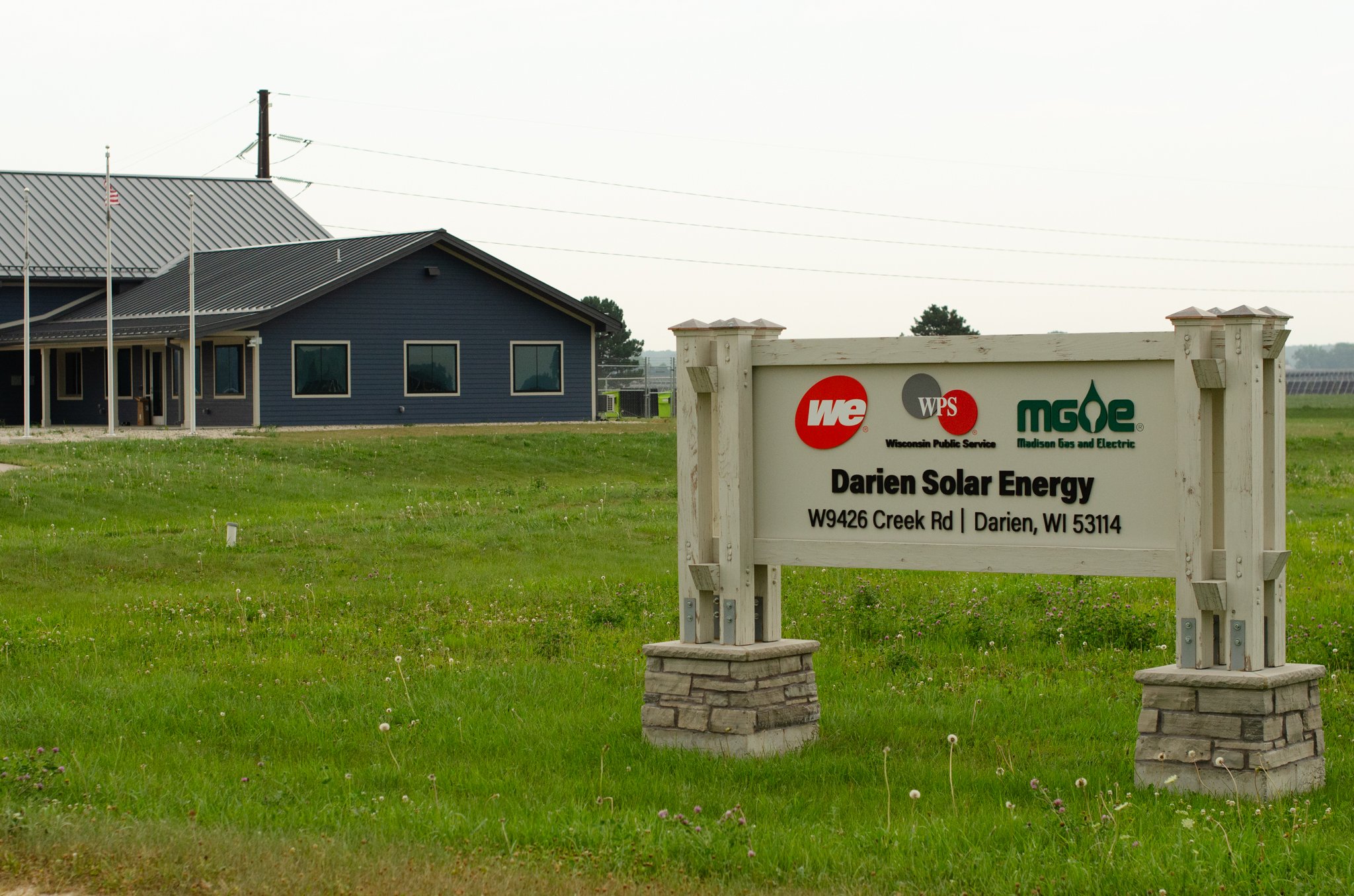
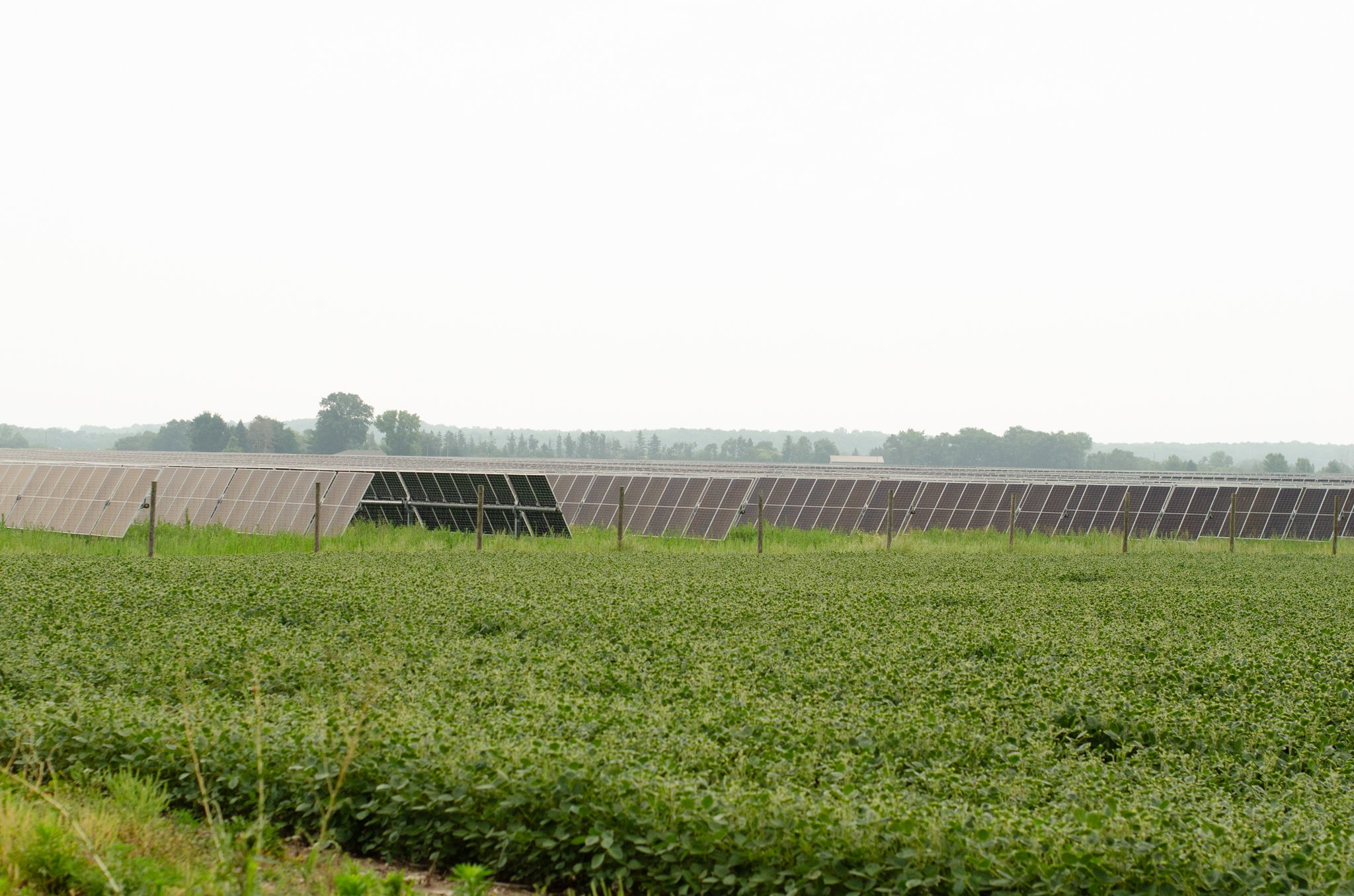
The existing Darien Solar Energy Center and associated electrical infrastructure are located near the proposed Foundry Ridge Energy Center. Several public comments referenced the cumulative effects of expanding energy infrastructure in the area. Photo by Darcey Rojas / EVA | Environmental Vigilance Alliance.
Farmland and rural character were treated as community assets
Residents spoke about century farms, livestock, private wells, hunting land, family property, Turtle Creek, eagles, cranes, owls, deer, turkeys, dark skies, quiet roads, and children returning to family land. (Source: PSC REF 598382.)
These were not merely sentimental statements. They described farmland, water, wildlife, darkness, quiet, and rural identity as valuable community resources.
For the families who live there, the proposed site is not vacant or interchangeable land. It is part of an agricultural and ecological landscape that already provides food, habitat, recreation, groundwater recharge, family continuity, and a sense of place.
Some speakers questioned why new energy infrastructure should continue to consume greenfield agricultural land when previously developed or industrial sites may present alternatives. The hearing did not resolve that site-selection question, but it made clear that residents do not regard farmland as an empty space awaiting development. (Source: PSC REF 598382.)
Noise, lighting, traffic, safety, and property values
Nearby residents also raised concerns about:
· Continuous or intermittent turbine noise.
· Humming noise and vibration.
· Lighting in an area that is currently dark at night.
· Construction and operational traffic.
· Pipeline leaks.
· Fires or explosions.
· Emergency response and evacuation.
· Property values and marketability.
· The cumulative effect of infrastructure on daily life.
The applicant has submitted noise modeling, lighting plans, traffic mitigation commitments, and emergency-response information. Project filings state that existing police, fire, and emergency medical services are expected to be sufficient. (Source: PSC REF 592365; PSC REF 592366.)
But models do not fully answer what a new industrial sound or light source will mean in a quiet rural landscape. Residents questioned how small volunteer departments and local responders would manage a major incident or evacuation, especially when the broader area may also contain gas, battery, pipeline, transmission, and data-center infrastructure. (Source: PSC REF 598382.)
Property-value concerns remain similarly contested. Project materials state that significant property-value harm is not expected, while residents believe proximity to a gas plant, pipeline, stacks, lighting, and industrial traffic could reduce both marketability and enjoyment of their homes. (Source: PSC REF 592365; PSC REF 592366; PSC REF 598382.)
A conclusion that property values are not expected to decline is not the same as a project-specific appraisal or sales analysis.
Supporters presented a legitimate workforce argument
Although opposition dominated the hearings, project supporters made an important case that should not be dismissed.
Union representatives and workers testified that the project could provide:
· Approximately 150 construction jobs.
· Family-supporting wages.
· Healthcare and pension benefits.
· Registered apprenticeships.
· Work closer to home.
· Opportunities for Wisconsin contractors and skilled trades.
· Additional economic activity for area businesses.
Construction work is sometimes described as temporary, but skilled tradespeople build long-term careers by moving from project to project. Their jobs, training, wages, and benefits are real economic considerations. (Source: PSC REF 598382.)
The question is not whether union jobs matter.
The question is whether those jobs require this particular facility, technology, and rural site - and whether comparable employment could be created through projects with fewer long-term community costs.
Several opponents explicitly said that they respected union workers and family-sustaining employment. They argued that those workers should be employed on clean-energy or other long-term projects that impose fewer lasting burdens on farmland and nearby residents. (Source: PSC REF 598382.)
The hearing revealed a profound lack of public trust
Perhaps the most consistent message was that residents do not trust the process or the information they have received.
Speakers described:
· Notices they said they never received.
· Early maps that were difficult to interpret.
· Conflicting or changing explanations.
· Previous promises connected to the solar development.
· Important information spread across multiple dockets.
· Questions about wastewater, ownership, operating hours, and data-center demand.
· A sense that local government has little meaningful power over the outcome.
· Fear that the project is already effectively decided.
The application documents formal outreach, meetings, notices, office hours, and public information efforts. (Source: PSC REF 592365.)
But procedural outreach did not create public understanding or public trust.
That distinction matters. A community can be formally notified and still not be given a clear, integrated explanation of what is being proposed, why it is being built, who will own it, who will pay for it, what additional infrastructure it requires, and how it fits into the region's future.
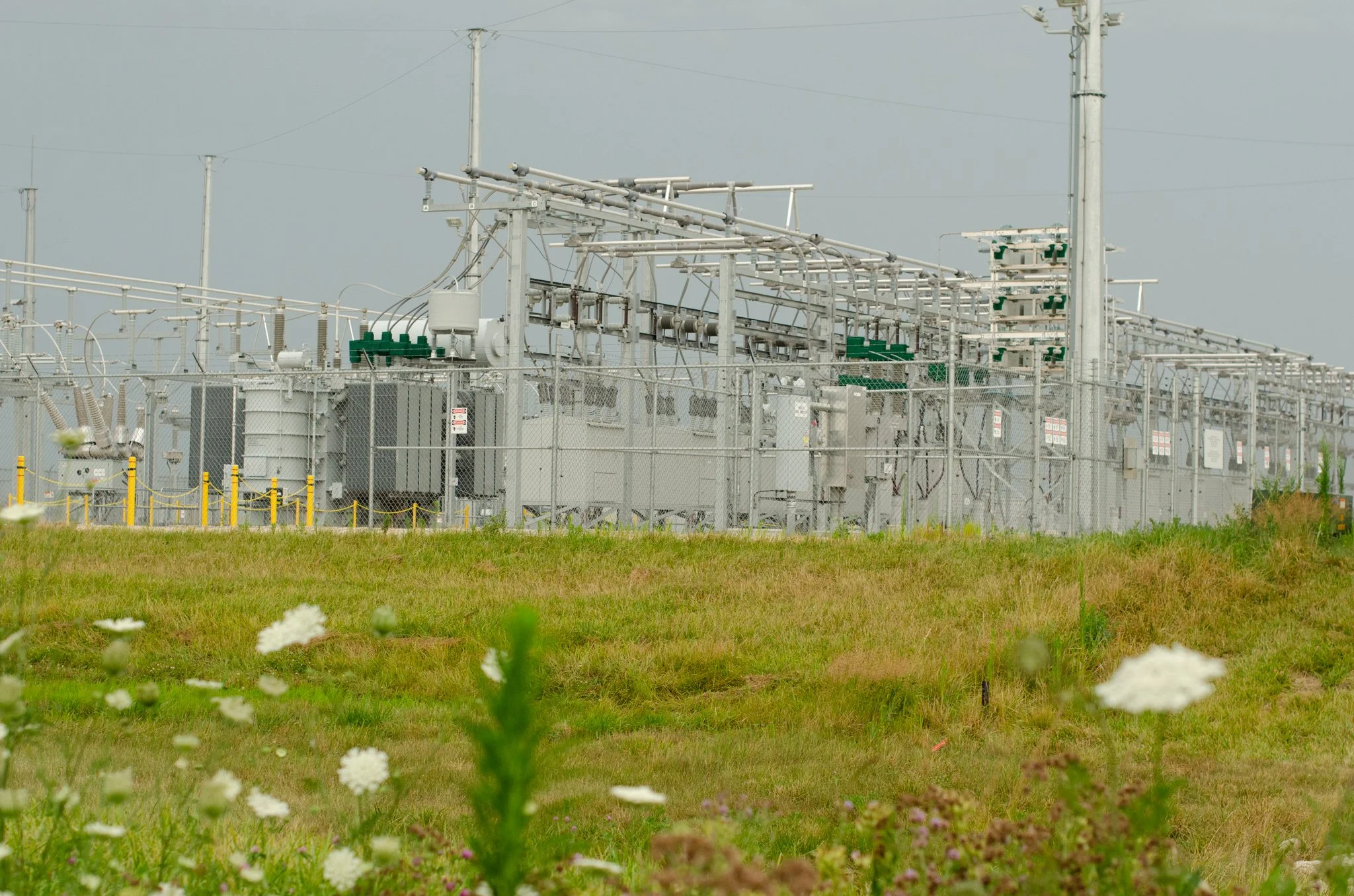
Another view of the existing Darien Solar Energy Center and associated electrical infrastructure located near the proposed Foundry Ridge Energy Center. Photo by Darcey Rojas / EVA | Environmental Vigilance Alliance.
What the hearing established
The hearing did not prove that every feared consequence will occur. It did not establish that every number or technical claim made by a speaker was accurate.
Several claims require verification or correction:
· The estimate of 118 premature deaths applies to the combined modeled effects of Foundry Ridge and Red Oak Ridge over 30 years, not Foundry Ridge alone. (Source: PSC REF 593425.)
· The official transcript records one speaker as saying "55,152 million gallons" of water per day, apparently adding the word "million" to a figure expressed in gallons. Taken literally, that would overstate the amount by roughly one million times. Project filings instead identify 50,400 gallons of maximum well withdrawal over 24 hours and 67,824 gallons of maximum daily consumptive use across the three turbines. (Source: PSC REF 598382; PSC REF 568152; PSC REF 592365.)
· The approximately 20 percent figure is the applicant's expected annual capacity factor, not a restriction limiting the plant to operating during only 20 percent of each day. Daily and weekly capacity factors could reach 100 percent. Separately, the proposed Title V fuel-based limit is equivalent to approximately a 27 percent annual capacity factor at full load. (Source: PSC REF 592365; PSC REF 597140.)
· It is too categorical to say that all electricity generated by Foundry Ridge would physically flow to one specific data center. The electricity would enter the regional MISO grid. However, Wisconsin Electric's filings show that a Very Large Customer has elected to subscribe to 100 percent of the project and that the dispatchable resource would not otherwise be required for Wisconsin Electric's existing generation portfolio without the incremental Very Large Customer load. (Source: PSC REF 592365; PSC REF 594996; PSC REF 596269.)
· Property-value loss, emergency risks, and other predicted harms require project-specific evidence and should not be presented as outcomes already proven to occur.
Correcting those claims does not weaken the community's case. It strengthens it by separating legitimate, evidence-supported concerns from statements that could be easily challenged.
What the hearings clearly established is that the opposition to Foundry Ridge cannot fairly be dismissed as simple resistance to change.
The record includes testimony about public health, project need, water and private wells, agricultural land, wildlife and Turtle Creek, rates and cost allocation, utility ownership, data-center demand, emergency response, cumulative infrastructure, local control, alternatives, jobs and economic development, and intergenerational consequences. (Source: PSC REF 598382.)
The larger issue Wisconsin must confront
Darien residents do not see Foundry Ridge as an isolated 324-megawatt peaker plant. They see it as one piece of a coordinated and rapidly expanding infrastructure system being developed to serve large new electricity demand.
The Public Service Commission must ultimately decide the Foundry Ridge application based on the formal record and Wisconsin law.
But Wisconsin's elected officials must confront the larger policy question:
Should communities continue to evaluate data centers, power plants, pipelines, transmission lines, substations, water infrastructure, and other related developments one project and one docket at a time - without first understanding their combined effects?
EVA believes the answer is no.
Wisconsin needs transparent demand disclosure, cumulative environmental and public-health review, stronger protections for communities and natural resources, and a statewide plan before additional large-scale data-center and energy infrastructure projects permanently reshape the state.
The Foundry Ridge hearing showed that residents are not asking officials to oppose progress. They are asking officials to define progress more carefully - and to stop treating rural land, clean water, public health, and local communities as expendable costs of development.
What Residents Can Do Now
Public comment information current through July 23, 2026.
The public hearing has ended, but the opportunity to participate has not.
Submit a public comment by July 23
The Public Service Commission is accepting written comments on Foundry Ridge through July 23, 2026. Comments must be received by the Commission by that date; mailed comments should be sent early enough to arrive before the deadline. (Source: PSC REF 598382.)
A public comment does not need to be highly technical. The most meaningful comments explain:
· How the project could affect you, your family, your property, your business, or your community.
· Which specific aspects of the proposal concern you.
· Why you believe the project has - or has not - been demonstrated to be necessary and in the public interest.
· What you want the Commission to do.
Residents may use EVA's How to Submit a PSC Public Comment guide for instructions and suggestions.
Only one comment may be submitted per person during a comment period. A person may choose to provide verbal testimony at the hearing or submit a written comment, but should not do both. If you testified on July 16 or already submitted a written comment during this period, do not submit a duplicate. (Source: PSC public-hearing guidance.)
Instead, share the hearing information and comment guide with someone who has not yet participated.
Help others understand what is being proposed
Many residents are still learning that Foundry Ridge is connected to a much larger set of decisions involving utility ownership, Very Large Customer demand, data-center growth, gas service, transmission, and other regional infrastructure.
Share this article with nearby residents and landowners, farmers and rural business owners, healthcare professionals, parents and educators, local and state officials, and anyone concerned about Wisconsin's energy and data-center development.
Public participation depends on people first understanding that these projects are connected.
Follow the official record
The public-comment deadline is not the end of the proceeding.
The official transcript of both July 16 public sessions was filed on July 20, 2026, as PSC REF 598382. It is now the authoritative record of the spoken testimony. (Source: PSC REF 598382.)
Residents can follow PSC Docket 9835-CE-100, review later filings, subscribe for docket updates, and watch for the Commission meeting at which the project will ultimately be considered. (Source: PSC public participation and case access.)
EVA will also continue reviewing the record and publishing significant developments, corrections, source materials, and links as they become available.
Support a statewide pause and cumulative impact review
Foundry Ridge has revealed a larger problem that cannot be resolved through one project docket alone.
Wisconsin is considering data centers, power plants, pipelines, transmission lines, substations, battery facilities, water infrastructure, and other developments through separate proceedings - even when those projects may be part of the same regional buildout.
EVA is calling for a statewide pause on major data-center development and associated infrastructure until Wisconsin:
· Conducts a comprehensive cumulative impact assessment.
· Requires transparent disclosure of the electricity and water demand driving proposed projects.
· Protects existing customers from unfair financial risk.
· Evaluates public-health, environmental, agricultural, and community consequences together.
· Establishes stronger siting standards and meaningful local protections.
· Creates a coordinated statewide plan before permanent development decisions are made.
Project-specific comments about Foundry Ridge must be submitted through the PSC's official public-comment process. Broader requests for statewide policy reform should be directed to Wisconsin's governor and state legislators.
Stay involved
Join EVA Updates and Action Alerts to receive notice when the statewide moratorium request launches, when significant Foundry Ridge documents or decisions are filed, and when Wisconsin residents have new opportunities to participate.
The July 16 hearing demonstrated that residents are paying attention. The next step is to ensure that the testimony does not disappear into a docket - and that Wisconsin addresses the larger system those residents worked so hard to expose.
Updated July 20, 2026, after review of the official PSC hearing transcript, PSC REF 598382.
Sources and Official Records
Source note: This article was checked against the official PSC transcript filed July 20, 2026, as PSC REF 598382, covering both July 16 public sessions at internally numbered transcript pages 34-291. Speaker-position counts are EVA's manual classification, not an official PSC tally. Parenthetical PSC references appear in the article where a statement depends on a specific technical or regulatory filing.
The article relies primarily on official records in Foundry Ridge construction Docket 9835-CE-100, Wisconsin Electric acquisition Docket 6630-BS-103, and the Very Large Customer tariff proceeding, Docket 6630-TE-113.
· Official Transcript of the July 16, 2026, Foundry Ridge Public Hearing - Docket 9835-CE-100, PSC REF 598382. Official record of the afternoon and evening public-hearing sessions and the sworn statements delivered by public witnesses.
· PSC video recordings of the July 16, 2026, public hearing — View the [2:00 p.m. afternoon session] and the [6:00 p.m. evening session] on the Public Service Commission of Wisconsin’s YouTube channel. The videos provide an audiovisual record of the hearing; the official written record is the PSC transcript, PSC REF 598382.
· Foundry Ridge Energy Center CPCN Application - Docket 9835-CE-100, PSC REF 592365. Revised public application describing the facility, operation, water use, air emissions, land requirements, transmission connection, noise, traffic, environmental resources, outreach, and related project details.
· Final Environmental Impact Statement: Foundry Ridge Energy Center - Docket 9835-CE-100, PSC REF 592366. Final environmental review of the proposed and alternative sites, including groundwater, wetlands, wildlife, air emissions, noise, land use, and mitigation.
· Hydrogeologic Assessment Report - Docket 9835-CE-100, PSC REF 568160. Applicant consultant report presenting groundwater assumptions, pumping scenarios, and modeled drawdown.
· Provisional Well Mitigation Plan - Docket 9835-CE-100, PSC REF 568161. Applicant proposal describing eligibility, investigation, claims review, and possible responses for qualifying pre-existing wells.
· Foundry Ridge Response to PSC and DNR Data Request Panak-1 - Docket 9835-CE-100, PSC REF 568152. Filing identifying the proposed 35-gallon-per-minute maximum well-withdrawal rate and addressing water, wastewater, and other completeness questions.
· WPDES Individual Permit Application - Docket 9835-CE-100, PSC REF 568157. Original permit application concerning operational wastewater generation, handling, and proposed discharge.
· Foundry Ridge Response to PSCW-EAT-10.1 - Docket 9835-CE-100, PSC REF 592403. May 28 response identifying revisions to the wastewater plan and stating that the oily-water separator was removed from the proposed-site layout.
· Direct Testimony of Dr. Jonathan Patz and related health analysis - Docket 9835-CE-100, PSC REF 593425. Expert analysis modeling the combined air-quality and health effects of Foundry Ridge and Red Oak Ridge.
· Wisconsin Electric Application to Acquire Foundry Ridge Energy Center and Related Facilities - Docket 6630-BS-103, PSC REF 566848. Application explaining Wisconsin Electric's proposed acquisition and the project's relationship to Very Large Customer demand. (PSC REF 566848 was deemed an unacceptable filing. A separate proceeding, Docket 6630-BS-103, concerns Wisconsin Electric Power Company’s application for approval to acquire ownership interests in Foundry Ridge and its associated facilities. A later public procurement agreement confirms that Wisconsin Electric and Invenergy anticipated an asset purchase agreement through which Wisconsin Electric would acquire the project’s development assets and then contract with Invenergy to construct the facility. (Sources: PSC REF 594113 and PSC REF 598230.))
· Wisconsin Electric Response to Data Request PSCW-AMG-2.4 - Docket 6630-BS-103, PSC REF 594996. Filing stating that the subscribing Very Large Customer elected to continue subscribing to 100 percent of Foundry Ridge as a Bespoke Resource.
· Wisconsin Electric Response to Data Request PSCW-AMG-2.7 - Docket 6630-BS-103, PSC REF 596268. Filing stating that the project is needed to meet the subscribing Very Large Customer's load obligations.
· Wisconsin Electric Response to Data Request PSCW-AMG-2.8 - Docket 6630-BS-103, PSC REF 596269. Filing stating that additional dispatchable generation would not be required for Wisconsin Electric's existing portfolio but for incremental Very Large Customer load.
· Final Decision in the Very Large Customer and Bespoke Resources Tariff Proceeding - Docket 6630-TE-113, PSC REF 591873. Commission decision establishing and modifying the regulatory framework for Very Large Customer service and Bespoke Resources.
· Final Approved Very Large Customer and Bespoke Resource Tariff Sheets - Docket 6630-TE-113, PSC REF 592911. Approved tariff terms governing Very Large Customer service and Bespoke Resources.
· PSC public-hearing guidance - What to Expect at a PSC Public Hearing. Official guidance explaining public-comment options and the one-comment-per-person rule.
· PSC public participation and case access - Public Participation. Official PSC page explaining how to review cases, access docket materials, and follow proceedings.
How to locate records: Select a linked PSC reference above or enter the docket number or PSC reference number in the Commission's Electronic Records Filing system. Because these proceedings remain active, readers should also review later filings, testimony, orders, and Commission decisions that may update the information summarized here.